Friday, January 16, 2015

Securing Your Website

With ongoing security threats, maintaining a website has become more of a laborious task than ever before. Gone are the days where you could just put up a site and be done with it. Today, if you are not actively monitoring your site, you could be susceptible to malicious threats such as DDOS (Distributed Denial of Service) and brute-force attacks.

DDOS attacks attempt to overwhelm a site by producing fake hits from multiple locations. With enough hits, the server may exceed its maximum connections to the database causing the site to stop responding. Brute-force attacks try to guess passwords by attempting to log in using every possible combination of numbers and digits. The latter is often unsuccessful due to the large number of possible combinations that would have to be tried but it becomes significantly easier if the intruder knows something about the user. For example, names of family members, pets, birthdays, hobbies, etc.

Both types of threats can be thwarted with firewall and special software like cPHulk. cPHulk prevents brute-force attacks by denying access to a site after a password is incorrectly specified a certain number of times. The downside of using such software is that it is not uncommon for an individual to be locked out of their own site if they accidentally leave cap locks on or forget the password. Firewall software can also be used to prevent malicious IP addresses or IP address ranges from accessing a site and overwhelming system resources. Knowing when to use each is a skill and delicate balancing act that must be learned today in order to survive in an ever more hostile world.

Wednesday, January 7, 2015

“Free Shipping” Claims Put to the Test

With ever increasing competition, offers of “free shipping“ are often used to lure in customers. When scrutinized, sometimes these offers actually cost the consumer more. One trick online retailers in particular use is advertising “free shipping” but neglecting to mention handling charges until checkout. One would also expect that the better known retailers would always be cheaper but often this does not prove to be the case. Some well known retailers tag the price of shipping onto the merchandise itself to make it appear as if you are not paying an extra charge for delivery. Others will fail to mention that “free shipping” does not include inside delivery.

A favorite strategy some office superstores employ is to change the item codes. By using their own item numbers, price comparisons become significantly harder if not impossible. Respectable stores like OfficeSalesUSA.com, a service of Haskell New York Inc., prefer a more straight forward approach using the standard MPN (Manufacturer Part Number) to identify items. This may not always work to their advantage but being upfront with customers is a hallmark of a well thought out operation.


Thursday, November 13, 2014

Swan Family Feeding


Born last spring, the two swans with a little gray in their feathers still are the cygnets ("swan babies"). Each year, the mother nests on the lake in back of me and spends several weeks there. On several years, the offspring did not survive. More recently, their success rate has been improving.


Wednesday, November 12, 2014

Microsoft Expands its Market

While awaiting the release of Windows 10, Microsoft ups the ante with the announcement of Office for Android. At the same time, the company is also aggressively pushing individual parts of MS Office products for Apple devices. Microsoft Word is now the top download on iTunes for iPhone and iPad. Free is the most powerful word in advertising. It worked to put Microsoft on the map and it is surprising competitors have not been able to take advantage of this niche. If Microsoft is smart, MS Office will also be included free initially on Windows 10. Although this may be a lucrative strategy, Microsoft has one more trick up its sleeve; the push for inexpensive smartphones.

Aside from extending its audience, the new Office products also provide greater compatibility and consistence. In the past, Office Mobile for iPhone was available but failed to produce the same user-experience even in the Office package. The revamped Word, Excel and PowerPoint apps now deliver a more consistent user-experience thus reducing the learning curve of Microsoft products dramatically on Apple and Android devices.

Also key to Microsoft's marketing plan is the introduction of cheaper smartphones. The Lumia 535 is packed with powerful features and costs only 110 euros (about $136). At that price, the phone provides a significant threat to the iPhone as consumers love Apple but price is an entirely different thing. Will this combined strategy and other efforts by Microsoft be enough to turn around the company? Only time will tell.

Wednesday, October 29, 2014

Origin of Strange Sounds in the Night

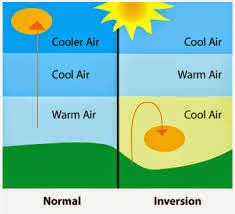
All around the world, reports of eerie sounds in the distance have many people concerned. Although these strange haunting noises may appear supernatural, science has another answer. Often heard in the winter months, these sounds are produced usually by machines on the ground and distorted by unusual weather phenomena. When a temperature inversion occurs, sound will rebound from the atmosphere above and come back to Earth. Since only the higher range of sound dissipates under these conditions, a distortion of the original sound occurs so that instead of hearing something like road construction or highway noise, witnesses will report "other worldly noises". Rest assured, there is nothing paranormal about these sounds. The longer the signal, the more it distorts. After traveling sometimes hundreds of miles, the tones received often bear little resemblance to the original sound source.

Friday, October 24, 2014

Large Box Turtle Visitor

Found this turtle in my backyard by the lake. I haven't seen it lately. Hopefully it's all right. It doesn't appear to like noise. I think it was just the sound of me working in my yard that scared it off. Nevertheless, what a spectacular animal!

How bad is Ebola Compared to Other Viruses?

Although Ebola is no picnic, the prognosis with early detection is remarkably good. Here in the US, those chances increase significantly. In countries affected by civil war and a near complete destruction of their infrastructures, of course patients will be less likely to recover. Limited medical supplies, lack of funding and in extreme cases, no real hospital to speak of has plagued these nations with a sad outlook. To combat a lack of permanent medical facilities, the US and other countries have setup makeshift hospitals and deployed army personnel to assist in the construction. Despite current efforts and pledged support, only about $100,000 of funding has cleared. Red tape remains perhaps a bigger enemy though comparably, Ebola is certainly not even close to a worst case scenario.

Unlike the H1N1 Flu, Ebola is not an airborne virus. This is significant because it reduces the chance of viral spreading without direct or indirect contact. Transmission occurs only when a person comes into contact with bodily fluids and is not likely transferred through the respiratory system. The Bubonic Plague of the Middle Ages and influenza epidemic of the early 20th century show how much worse and pandemic a virus can be. Unlike the past, today we know what causes viruses and understand the importance of hygiene and following proper medical procedures. While we still get it wrong from time to time, Ebola is yet another chapter of our learning experience. It may not be easy but it is most certainly controllable. Education and political will though remain key to containment as disinformation is a green eyed monster. People associating Ebola with coincidental vaccinations mistaken as a source of the virus need to understand how Ebola is spread and why a future vaccine may be the best chance of preventing its spread. Until then, the antibodies of those who have survived the virus may be our best weapon to stave off a true pandemic.

Recommended Reading:

http://www.archives.gov/exhibits/influenza-epidemic/
http://www.the-scientist.com/?articles.view/articleNo/31104/title/Vaccines-are-Safe/